A Wake-Up Call for Cybersecurity Teams
In the latest high-profile cyber incident, attackers exploited a trusted software supplier to infiltrate multiple companies across finance, logistics, and manufacturing.
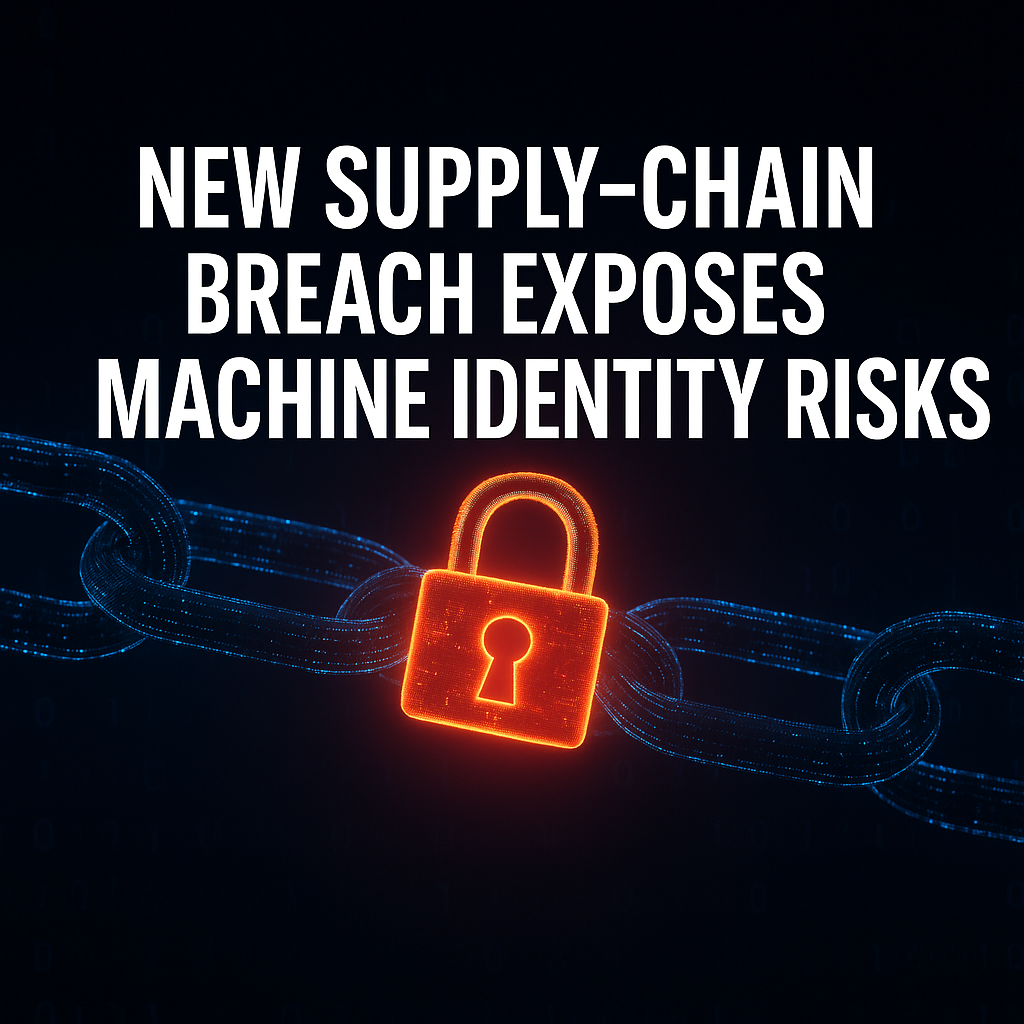
What made this breach especially dangerous wasn’t just the scale — it was how easily the attackers abused machine identities (digital certificates and keys) to move unnoticed through networks.
Security researchers describe it as a “chain-reaction attack,” where one compromised vendor gave hackers access to dozens of downstream clients. This event reinforces what cybersecurity experts have been warning about for years: machine identities are the new weak link in digital supply chains.
What Are Machine Identities?
Every application, API, IoT device, and cloud instance uses digital certificates and encryption keys to identify and authenticate itself — just like a user password, but for machines.
These “machine identities” secure the billions of daily interactions between systems.
However, when a certificate is stolen, misconfigured, or left unrotated, it becomes a powerful weapon for attackers. It allows them to impersonate trusted services and bypass traditional security tools.
According to a 2025 Gartner report, machine identities now outnumber human identities by 45 to 1 — creating an enormous, often invisible attack surface.
How the Breach Happened
While details remain under investigation, initial reports suggest the attackers:
- Gained access through a compromised API key from a third-party supplier.
- Used forged certificates to establish trusted communications inside corporate networks.
- Deployed backdoors that appeared legitimate because they were signed with valid credentials.
- Exfiltrated data while remaining undetected for weeks.
This mirrors tactics seen in previous attacks such as SolarWinds (2020) and MOVEit (2023) — both supply-chain compromises that exploited trust relationships.
Why Businesses Should Care
Modern enterprises depend on hundreds of external partners — from cloud vendors to payment processors.
When one link in that chain breaks, every connected organization becomes a target.
Beyond immediate data loss, the reputational damage, compliance penalties, and downtime can be devastating.
Analysts estimate the average cost of a supply-chain cyber incident now exceeds $4.5 million globally.
How to Protect Your Organization
- Inventory all machine identities – Know every certificate, key, and API token in your environment.
- Automate certificate lifecycle management – Use tools like Venafi, Keyfactor, or AWS Certificate Manager.
- Rotate keys frequently – Expired or reused keys are a hacker’s dream.
- Implement Zero-Trust architecture – Never assume internal systems are safe by default.
- Monitor for unusual machine-to-machine activity – Especially encrypted traffic anomalies.
- Vet your vendors – Require supply-chain partners to maintain strong identity management and security compliance.